Tuesday, February 21, 2012

            Ice hockey sticks have come a long way since their first manufacturing in the late 1880's. At first, you could only buy wooden sticks that which are heavy. The sticks back then did not have much of a curve either, as you could not lift the puck very well. The toe of the blade was also longer and was square which made puck handling easy. Today, you can get sticks costum made by contorting how much flex it has, what blade you want and the length. The most popular stick type being used today is a composite stick made with carbon fiber.

            Ice hockey was becoming popular during the later 1880's. At this time, the first rules for the game were established along with the manufacturing of hockey sticks. The NHL was created in 1917 and rules were made on how long sticks could be along with the shape of the stick in 1920. The first two piece stick was created in Montreal, Canada in 1928. Until 1928, all hockey sticks were made of one piece. The blade and the shaft were separated into two sections, giving the stick more strength and the option of changing the blade if it broke.

            The blade itself has gone through many changes as well. During the 1950's, Andy Bathgate tampered with his blade to give it a curve. He discovered that a curve would make his slap shot behave in erratic ways. Pretty soon more people started to do the same thing and it caught on to the manufacturers. Sticks were now being produced with a 3in curve in the 1960's. The 3in curve caused the puck to lift, something that has never happen before. The players called it the "banana blade". The players loved the new results they were getting, but the goalies did not like it at all. Goalies did not wear helmets back then, and they began to complain about the danger they faced, literally. In 1967, a rule was made that the curve on a blade could be no more than 3/4in. If a player is caught with a curve that is more than 3/4in, they will serve a 2 minute minor. Goaltenders also began to wear to wear helmets. By the time the 70's came around, manufacturers were experimenting with a new version to stick making. They began to laminate to wood in order to cut back on the cost of making them and it made the sticks lighter and stronger. Wooden sticks warp easily which changes the flex and stiffness in the shaft. Each production is never the same either, when you break a stick you will never find another just like it. This decreased the velocity and accuracy on wirst shots ad snap shots.


              The hockey stick has made leaps and bounds of  improvements to get where they are today. They have extraordinarily precise "flex patterns" which aid in power and accuracy of wrist and snap shots. The CCM U Crazy Light is one of the lightest sticks on the market. CCM came out with this model around 2009. At first, the U CL was not popular because they broke very easily. In 2012, the new models of the U CL have become much more durable. Bauer also has a line of composite sticks that are also very popular. The main problem that sticks face today is that they have a short life span. These sticks do not usually last more than one or weeks with the pros. They also cost much more than a wooden stick.
          
            Sticks are not the only thing that has gone through many changes. Skates have come a long way as well. The U+ Crazy Light skates by CCM are the lightest skates on the market. I have these skates and they are the lightest skates I have ever owned. CCM makes the best skates for speed and quickness. Skates that were made 30 years ago were made with a blade and leather like boots. They did not have much protection like they do today. If you got hit with a puck back then in the foot, you would get a bad bruise or a broken foot. Today you can block shots with your feet, it still hurts but it's not as bad as it use to be. Skate sharpening is another aspect of hockey that is evolving. NHL players are now getting what is called "flat bottom" sharpening for their skates. This new sharpening improves control, agility, stops and starts. I began to use this new sharpening and I have noticed a difference in the way my skates dig into the ice. It gives you a much better push-off and it really does feel like you are gripping the ice when making a tight turn. All of these improvents have made ice hockey a much more competative game. It has also made it a lot of fun to watch as well. If we did not have curved blades, we would never shoot to go "top shelf" on the net. If costomized sticks never ecixted, Zdeno Chara would have never been able to do this... 


Saturday, January 21, 2012

Business As Usual

  Everyone who follows basketball knows who LeBron James is. He has broken many records and created new ones such as the first forward to average more than 8 assists per game and received 2.5 million NBA All-Star votes three times. He went straight to the NBA after finishing high school at St. Vincent-St. Mary High school. He was selected as the number one draft pick by the Cleveland Cavaliers during the 2003 NBA Draft with a seven year contract. When his contract ended in 2010 he became a free agent and decided to play for the Miami Heat. Many basketball fans were disappointed with this decision, especially the Cav fans. But why? Basketball players who are free agents and go to another team is a common thing in the NBA so why should James get special attention?

   The Cleveland Cavaliers won the draft lottery because they had the worst record for the 2002-2003 season. This is the way it is done in all professional sports. When the Cavs won the lottery draft they said they select LeBron James. The Cavs wanted James for one reason, to win games. Unfortunately, that is not how professional sports work. LeBron James was called “The Savior” soon after he was selected by the Cavs, who would bring a championship to Cleveland. The seven years that James was with the Cavs they did not win a championship. They did not have much success at making it to the playoffs for the first couple of seasons. Dan Gilbert became the owner of the Cavs during the 2005 off season. They came close a to the championships during the 2005-2006 season. They made it to the NBA finals and got eliminated by the San Antonio Spurs in the first round. They came closer and closer to the finals each season.

    When James' contract ended he became a free agent and had the choice of staying in Cleveland or going to another team. On July 7th 2010 ESPN showed an hour special called "The Decision" where James announced that he would join the Miami Heat. However, the Cavaliers were not informed of this until the last minute. Dan Gilbert wrote an open letter to the Cav fans telling them that they have been betrayed by James.

   
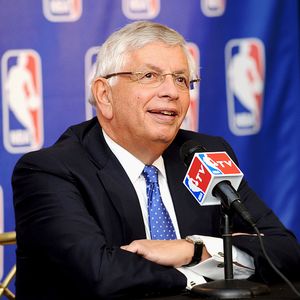
   The letter did what it was meant to do; make the fans hate the man they use to call "The Savior". David Stern, a commissioner of the NBA, fined Dan Gilbert $100,000 for the open letter he wrote. However the Cavaliers was not the only team that was upset with James' decision. The other teams that he showed interest in were hurt as well. This turned out to be positive instead of negative. Every team that the Heat played against sold out because everyone thought he was a traitor and wanted to see him lose.

   The whole situation was blown way out of proportion. Dan Gilbert knew what he was doing. If he did not write that letter, the Cavs would not sell out each time the Heat come to Cleveland. The fact that James grew up in Ohio and was picked up by the Cleveland Cavaliers is a coincidence. The worst team just happened to be where he grew up. The fans did show him support; but only because he, and only he, was going to bring a championship to them. The worst team put all of their hopes and dreams into James. It only makes sense that he wanted to leave. The Cavaliers never treated him badly and he never said anything badly about them. He just got tired of trying to do it on his own. He wanted to be a team player, where as in Cleveland he carried the offense every night. The Cav fans were very upset because they knew that when he left, their shot at winning a championship was gone. That's why he was given so much attention. The Cavaliers had to make sure that they would still sell tickets so they turned the fans against him. It happens in sports all of the time.    

Friday, January 6, 2012

Why the 1980 Winter Olympics was a big deal

           The USA vs. USSR hockey game of the 1980 Winter  Olympic games is considered the greatest sporting event of the century. When team USA played their first game there were not many fans in the rink. When they were winning and played against the USSR the rink was packed and people were crowded outside of the building. Hockey, especially during this time period, was not popular in America. So why were so many Americans paying attention to the USA team made up of college kids?

            America was going through hard times during the 70s. Yes, there was the Cold War, but there were other events that did not help. America experienced two oil shortages; one in 73 and the other in 77. People had to wait in long lines to get a small amount of oil. The use of nuclear energy came into play to take place of natural resources. However, the Three Mile Island had a melt down in 79. Doctors were able to prevent most of the radioactive gasses, but some still got out of the factory. The factory was expensive and hard to maintain and it took a long time to rebuild the reactor. On top of all this was the Cold War. It is obvious that prior to the 1980's, America was not in great shape.

           The USA hockey team acted as the spiritual leaders for the nation. They were considered the under dogs as they were the seventh seed out of twelve. The USSR hockey team was considered the best in the world. They practiced every day and they all played together for a long time. The USA team did not start playing together for years and years like the Soviets. They were also a young team. But they had passion and they came together as a team. They showed America that we could beat the USSR during hard times. It reminded everyone what it means to be an American.